


Donors Fed Up: Why Businesses are Walking Away from Pushy Nonprofits
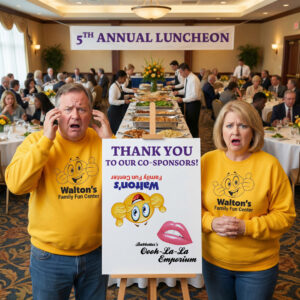 Last year, we saw firsthand what happens when a regional non-profit chased short-term dollars at the expense of long-term sponsor relationships.
As deadlines piled up, corners were cut. By event night, the sponsor’s logo appeared in three different colors, was stretched out on one banner, and sat side by side with another organization whose mission quietly clashed with the sponsor’s stated values. Worse, the logo showed up on auction displays that included “adult” items – something completely out of alignment with the company’s brand and audience. No one on the nonprofit side caught it in time, because on one was officially responsible for looking…or caring about the sponsor. They just wanted the dollars.
The sponsor never made a scene, nor did they send a blistering email. They just never renewed their sponsorship. Since that time, that non-profit has continued to struggle to secure sponsors who wish to contribute at a sustainable level with dollars and/or quality auction items. Why? Sponsors (and event attendees), talk to each other, and reputation is part of every due diligence check.
The lesson isn’t that sponsors are hard to please, it’s that non-profit organizations need to have respect for contributing sponsor brands. When a nonprofit treats a sponsor’s logo as a free decoration instead of a valued asset, it sends a quiet message that the relationship is transactional, not strategic. When it treats the brand with care – guidelines, approvals, thoughtful placement – it sends the opposite message: your reputation is safe with us, and partnering with us will reflect well on you.
Making an Impact in PowerPoint: How to Care About More than Content
Good ‘ol PowerPoint. It can be your best friend, offering support and making your team look good when meeting with customers. But if it’s not living up to its potential, PowerPoint can also drag down any presentation.
JMS Marketing has worked with clients to develop many PowerPoint templates and presentations, and there are best practices we try to follow to make sure these presentations shine for—but not outshine—our clients. We’ve decided to gather internal strategies and take a peek at what others are doing to share some tips and tricks with you. Next time you’re developing a new presentation, keep these things in mind.
A template sets the tone
For any new presentation, we always recommend developing a template—or a few—that represents your brand. While built-in themes may work on some occasions, most viewers can easily spot it, and it most often says nothing about who you are, what you do or the value you can bring to the customer.
Instead, create a theme unique to your business to help customers identify with your brand from the start of the presentation and carry a seamless impression all the way through. By using the same template or a series of templates that all fit within your brand guidelines, customers will begin to identify with your team or company in a similar way no matter who prepares, delivers or follows up on the presentation itself.
Less is more when it comes to copy
Don’t get me wrong; at JMS, we love to write and the power of words! But when it comes to PowerPoint, copy can make or break a presentation. We’ve all sat in on a presentation where the entire slide—every slide—is full of long sentences all the way down the screen. And we all either enjoyed the midday nap or used a great deal of energy to stick it out and likely, not remember most of it anyway.
A good rule of thumb is to stick to only five or six lines of copy with minimal content on each. Phrases tend to work better than sentences, as the presenter can fill in the details. Keep in mind that a viewer is also a listener, so they are required to process both what you say and what you show. The key is to make sure that what you show complements, not takes away from, what you say.
While you’re at it, don’t be afraid to include content sans (without) bullets. While bullets are often the standard and can help organize information, without them, copy can sometimes add an extra visual element. To help organize your content, think about leaving the audience with one idea per slide. Most groups would rather see 20 compelling slides they can remember rather than 10 slides too heavy with information.
Fonts DO matter
Presentations are meant to help make a visual statement, but there is a clear line when it comes to fonts. Choose a typeface that is legible, often sans sarif fonts (those without tails on the ends of letters; this font, for example is sans sarif), and make sure to choose a color that is easily viewed against your background (keep this in mind when developing your initial theme and avoid backgrounds with many varying colors!).
Size and weight are important too. Less copy will make it easier to ensure your content is large enough to read. Depending on your background, bolding your text may make all the difference. While copy does not need to completely fill the page, it should be just as easily read in the back of the room as the front.
Leave the rainbows outside
One creative way to draw attention to an important word or phrase is to use a contrasting color for that copy. Using a bright color in between white words will make the idea pop. But the trick is finding the balance. Stick to only two colors from your color scheme (three if really necessary) in your content and try to ensure the images or graphics in the rest of the slide also complement one another. Tones may vary, especially when using colorful images, but set a goal for only five obvious colors on each slide and be sure
Make an impact—one impact
Have you seen those PowerPoint slides that are jam-packed with not copy but photos? The intent may be good, varying copy with visuals, but visuals should make a statement and leave the viewer feeling the way you want them to feel. Consider selecting one image that has a larger impact on its own. Or use visuals to increase the emotional connection to a key statistic or piece of information rather than simply listing numbers.
These types of slides can also pair well with varying presentation styles. Any speaker can speak to an image or visual piece of information. But more importantly, a practiced speaker may consider altering the rate at which they speak, leave a pause or emphasize a certain piece of information for additional impact. Your customers didn’t sign up to experience the next new action flick, but since B2B decisions are much more emotional than B2C, it’s okay to go one step further to convey the important role your team can play for them.
Make the distractions purposeful
One PowerPoint feature that receives much debate is the use of transitions between slides. Our advice is to keep the transitions minimal or similar between slides to let your content shine. Content builds; where copy appears one line, word or section at a time after a click; on slides can even be valuable if you want to control when viewers received certain information. Other “distractions” can also be meaningful.
JMS routinely advocates for using supporting content such as videos, sound clips, creative imagery, graphics, short stories or other tools to enhance the visual appeal of your content. Choose a small number of key supporting pieces for optimal impact and make sure they tie clearly to the information you are presenting (extra tip: if you don’t have internet access, do a quick Google search for free websites that can pull videos from YouTube to embed in your presentations!).
No matter your business, presentations are likely a part of your sales cycle. Content is always important, but be sure to consider how all aspects of your presentation will affect your customers. Feel free to contact us to learn more about new features from PowerPoint and how a carefully developed presentation can support your business!
Pokémon Go and the Power of Branding
Pokémon are back and they have taken over the entire world, literally. Nintendo and Niantic Labs have released Pokémon Go, an augmented reality (AR) game where players explore the real world to find and catch Pokémon through an app on their phones. The huge success of the game has shocked everyone by jumping to the top of the app charts, bringing in millions of dollars from in app purchases, and passing Tinder and Twitter in number of users. It has taken over social media threads and headlined the national news in less than a week. What made Pokémon Go such a huge overnight success? What can be learned about branding and marketing from the game? And who to choose as a starting Pokémon? Bulbasaur, Squirtle, or Charmander? (Charmander, duh)
The biggest key to the game’s success has been millennials who grew up in the 1990’s playing the original Game Boy games, collecting the trading cards, and watching the cartoon before school every morning. Pokémon was a huge franchise in the late 90’s and early 2000’s and now everyone who grew up during Poké-mania is jumping at the chance to catch Pokémon in real life. The game is also very popular among kids today since the franchise has expanded since the late 90’s giving it a huge cross-generational audience.
The success of Pokémon Go is rooted in the branding and popularity Nintendo built in the late 90’s. Thanks to their success back then, they’ve been able to recapture that audience, build on their already gigantic brand, and effectively create Poké-mania 2.0. Not that everyone has the benefit of capitalizing on the kind of prior success that Pokémon had, but Pokémon Go shows what building such a strong brand can do presently and the benefits it can have even over a decade later.
Pokémon Go is a two-fold example of marketing success. In addition to the strong brand presence that has been cultivated over the past 20 years, the game is a potential marketing gold mine for small local businesses and large box stores alike. Because the game centers around places, there is a lot of opportunity to use tools within the app to draw Pokémon and Players to your business.


Reference: http://www.slate.com/blogs/business_insider/2016/07/11/some_restaurants_are_using_pok_mon_go_to_catch_customers.html
Companies are offering everything from discounted food prices to free wifi and charging stations to encourage future Pokémasters to stop in. Potential consumers are choosing how they spend their time, where they are eating, working out, buying clothes, etc, in order to be closer to locations that have Pokémon. ‘Lures’ which are used to attract Pokémon (thus potential consumers!) to certain locations are available for purchase. Sponsorships are not yet available, but rumor has it that it’s only a matter of time. For a price, companies will most likely be able to make their business’ Pokéstops or Gyms. In the near future, it’s not unreasonable to think that entire marketing campaigns will be developed centered around Pokémon Go sponsorships.
Companies are also taking to social media to take advantage of the new craze. Whether it’s passing along tips about what types of Pokémon are nearby, offering discounts to Pokémon hunters, or creating Pokémon-themed fare, many businesses have very quickly recognized the opportunities this new craze offers. Click here to see a few of the businesses that have taken this approach.
It’s incredible how successful Pokémon Go has been and there is a lot to take away to apply to one’s own branding and marketing strategies. How long will the craze last? Only time will tell, which is all the more reason to use this tool to its fullest as quickly as possible.